
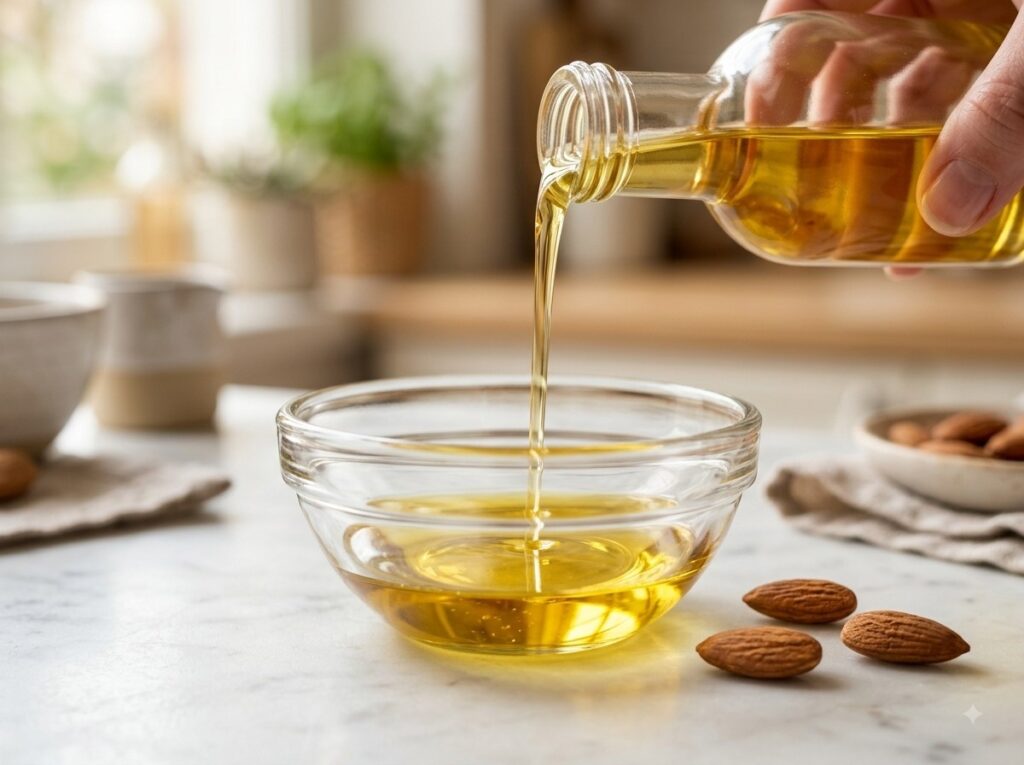
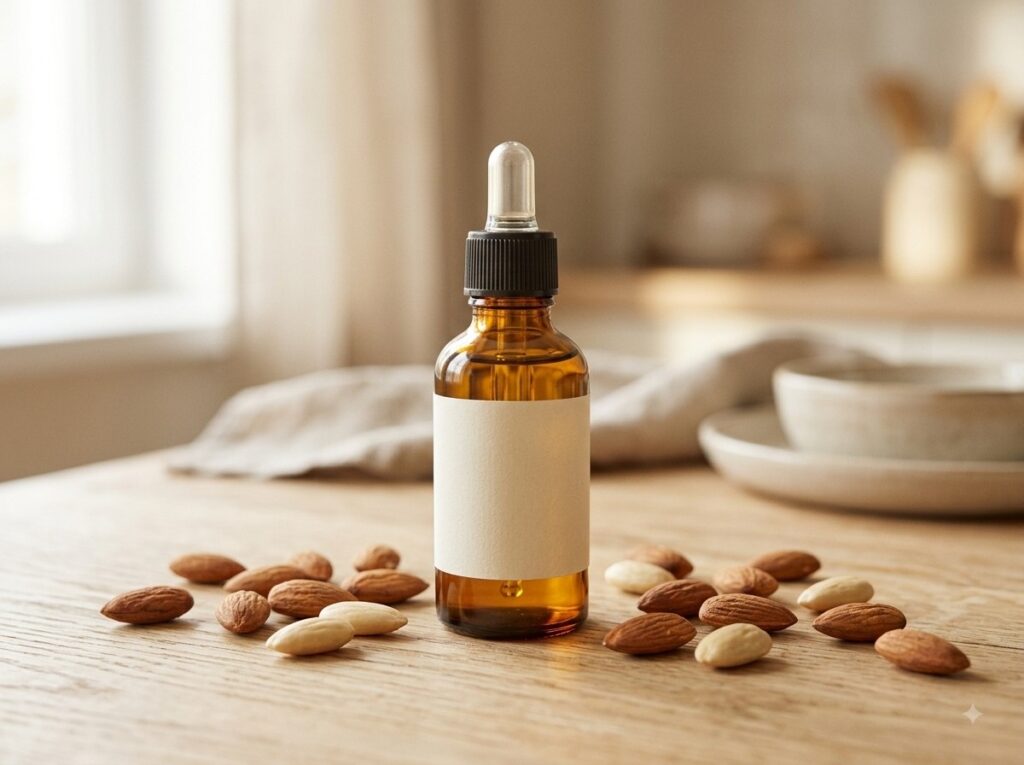
Is almond oil good for hair? It’s one of the most common questions I get, especially from people who’ve seen it listed as a miracle fix for thinning hair on social media. I want to be straight with you before we go any further — almond oil isn’t going to make hair grow faster than your genetics allow. But that doesn’t mean it’s not worth using.
Let’s separate what almond oil actually does from what it’s often claimed to do.
What’s Actually in Almond Oil
Sweet almond oil is rich in vitamin E, along with fatty acids like oleic and linoleic acid, and small amounts of magnesium. In the lab, when we run a basic fatty acid profile on almond oil, oleic acid usually comes out as the dominant component — that’s the same fatty acid you’ll find in olive oil, and it’s known for its ability to penetrate hair shafts reasonably well compared to heavier, more waxy oils.
None of this directly triggers new hair growth from the follicle. What it can do is condition the hair strand itself, reduce breakage from brushing and styling, and add a visible shine that makes hair look healthier and fuller.
Is Almond Oil Good for Hair, Really?
Here’s the honest answer: almond oil supports the conditions around healthy-looking hair rather than accelerating growth at the root. Think of it less like fertilizer for your scalp and more like a protective coat for hair that’s already growing. If your hair is breaking off before it reaches a longer length, reducing that breakage can make your hair appear to grow faster over time — because you’re retaining more length instead of losing it to split ends and snapping.
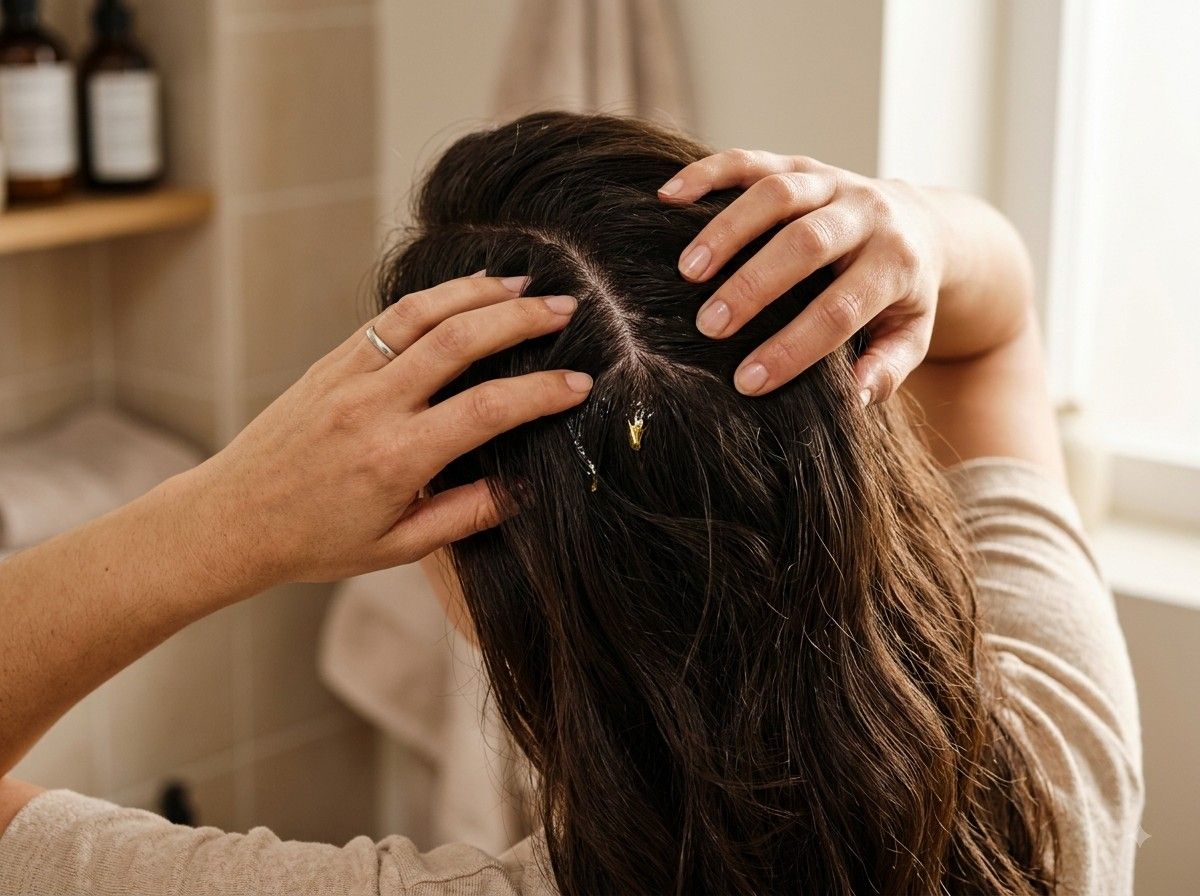
A gentle scalp massage while applying any oil, almond oil included, does increase blood flow to the area temporarily. Some people find this relaxing and helpful as part of a routine, but it’s the massage technique doing a good portion of that work, not the oil itself pulling some kind of chemical trigger on your follicles.
How I’d Actually Use It
If you want to try almond oil for your hair routine, here’s a simple, low-risk approach:
- Pre-wash treatment: Apply a small amount to dry hair and scalp about 30 minutes before shampooing. This can help reduce the stripping effect some shampoos have.
- Leave-in for ends: A few drops rubbed between your palms and worked through just the ends helps with dryness and split-end appearance, without weighing down your roots.
- Scalp massage: Warm a small amount slightly, then massage into the scalp for a few minutes before rinsing or leaving it in overnight if your hair type tolerates it.
Start small. A little goes a long way, and using too much, especially near the roots, can leave fine hair looking greasy rather than healthy.
Who Should Be Careful
If you have a tree nut allergy, almond oil is not something to test on your scalp — allergic reactions to almond oil, while less common than food-based reactions, are documented. Always patch test on a small area of skin, like your inner forearm, and wait 24 hours before applying it more broadly, especially the first time you use it.
If your hair type leans very fine or low-porosity, almond oil can sometimes feel heavy or sit on top of the hair rather than absorbing well. In that case, using a smaller amount, or applying it only to the ends rather than the scalp, usually works better.
A Simpler Way to Think About It
I’d put almond oil in the same category as a good conditioner — it makes the hair you already have look and feel better, and it can indirectly support length retention by cutting down on breakage. If you’re dealing with actual hair thinning or loss from the scalp, that’s a different issue entirely, and one worth discussing with a dermatologist rather than trying to solve with any single oil.
Frequently Asked Questions
Does almond oil actually help hair growth?
Not directly. Almond oil doesn’t stimulate new hair growth from the follicle, but it conditions existing hair and can reduce breakage, which helps hair retain length over time.
How do I use almond oil for hair growth and thickness?
Apply a small amount to your scalp and hair before washing, massage gently for a few minutes, and leave it on for 20–30 minutes (or overnight if your hair tolerates it) before shampooing as usual. Consistency matters more than quantity.
Is almond oil good for low porosity hair?
It can work, but low-porosity hair sometimes struggles to absorb oils well. Using a smaller amount, applying it to damp rather than dry hair, or focusing only on the ends tends to work better for this hair type.
Can almond oil cause hair loss?
There’s no evidence almond oil causes hair loss. If you notice increased shedding after using it, it’s more likely an unrelated cause or, rarely, a mild allergic or irritant reaction — discontinue use and check with a dermatologist if it persists.
How often should I apply almond oil to my hair?
One to two times a week is a reasonable starting point for most hair types. Daily use, especially near the roots, can lead to buildup for some people.
Disclaimer :This article is for informational purposes only and is not a substitute for professional medical or dermatological advice. If you’re experiencing significant hair loss or thinning, please consult a dermatologist.