
Walk into almost any Indian or Bengali kitchen and you will likely find a bottle of mustard oil sitting right next to the stove. It is the oil that gives pickles their punch, gives tempered spices their signature crackle, and turns a simple curry into something memorable. Beyond the kitchen, mustard oil has also built a reputation for skin care, hair care, and warm massages passed down through generations. In this guide, we will look at what mustard oil actually is, the benefits backed by both tradition and science, how to use it safely, and a few precautions worth knowing before you pour it into your next meal.
What Is Mustard Oil and How Is It Made
Mustard oil is extracted from the seeds of the mustard plant, most commonly Brassica juncea (brown mustard), though some producers also use Brassica nigra (black mustard) or Brassica hirta (white or yellow mustard) seeds. The seeds contain very little flavor until they are crushed; the crushing process ruptures the seed’s cells and allows an enzyme called myrosinase to react with glucosinolates, releasing the pungent, sinus-clearing aroma mustard oil is known for.
There are two common types on store shelves. Cold-pressed mustard oil, often labeled kachi ghani, is made by pressing raw seeds at low temperatures using a traditional expeller or stone-grinding method. This keeps more of the natural pungency, color, and nutrients intact, and is the version most commonly used across Bengal, Odisha, Bihar, Nepal, and Bangladesh for everyday cooking. Refined mustard oil goes through extra processing, including heat treatment and filtering, to reduce free fatty acid content and neutralize some of the sharpness, giving it a milder smell and lighter color. Refined versions are more commonly exported and used in regions where regulations limit the sale of cold-pressed mustard oil as a cooking oil. (For a similar refined-versus-unrefined comparison in another popular oil, see Refined vs Unrefined Coconut Oil.)
Nutritional Profile of Mustard Oil
A tablespoon of mustard oil is almost entirely fat, but the type of fat matters more than the total amount. Like olive oil, it is particularly rich in monounsaturated fatty acids, primarily oleic acid, generally considered a heart-friendlier choice than oils dominated by saturated fat. It also provides polyunsaturated fats, including alpha-linolenic acid (an omega-3) and linoleic acid (an omega-6), in a ratio many nutritionists consider more balanced than some other vegetable oils. Beyond fats, mustard oil contains vitamin E, an antioxidant that helps protect cells from oxidative stress, and allyl isothiocyanate, the compound responsible for its sharp smell and antibacterial reputation. It also naturally contains erucic acid, which has raised health questions among regulators and which we return to in the precautions section below. If you’re curious how it stacks up against other options, check out Top Seed Oil Alternatives.
Health Benefits of Mustard Oil
Supports Heart Health
Because mustard oil is low in saturated fat and has a favorable balance of omega-3 to omega-6 fatty acids, it has traditionally been linked to better cholesterol readings compared with oils high in saturated fat, and some research from India has explored this connection further. It is not a cure-all, and it will not undo the effects of a diet heavy in processed food, but swapping it in for oils loaded with saturated fat can be a sensible move for heart-conscious cooking, particularly for high-heat methods like sautéing and tempering where its flavor shines.
Natural Antibacterial and Anti-inflammatory Properties
The same allyl isothiocyanate that gives mustard oil its kick has shown antibacterial and antifungal activity in laboratory research, which helps explain two of its oldest uses. In the kitchen, it is part of why mustard oil has long been trusted as a natural preservative in pickles and fermented condiments, helping keep spoilage at bay without refrigeration. Topically, this same compound is part of why mustard oil has traditionally been dabbed on minor skin irritations and small cuts in home remedies, though it should never replace proper wound care on broken skin.
Skin Nourishment
Massaged into the skin, mustard oil is often used to soften rough, dry patches and lock in moisture, especially during colder months when skin tends to lose hydration faster. Its natural fatty acid content forms a light barrier on the skin’s surface, which can help reduce water loss after bathing. The oil’s warming sensation as it is massaged in is also why it is a popular choice for winter massages in many South Asian households. Some people mix it with a lighter carrier oil to make it easier to spread over larger areas of the body.
Hair and Scalp Care
Mustard oil is a staple in traditional hair oiling routines across South Asia, often warmed slightly before being massaged into the scalp and left in for anywhere from thirty minutes to overnight. People use it in the hope of improving circulation, reducing dryness, and adding shine. Large clinical studies on mustard oil specifically for hair growth are limited, so it is best to think of it as a moisturizing and conditioning treatment rather than a proven remedy for hair loss. That said, its fatty acid and vitamin E content does make it a reasonable option for soothing a dry, itchy scalp.
Culinary Uses of Mustard Oil
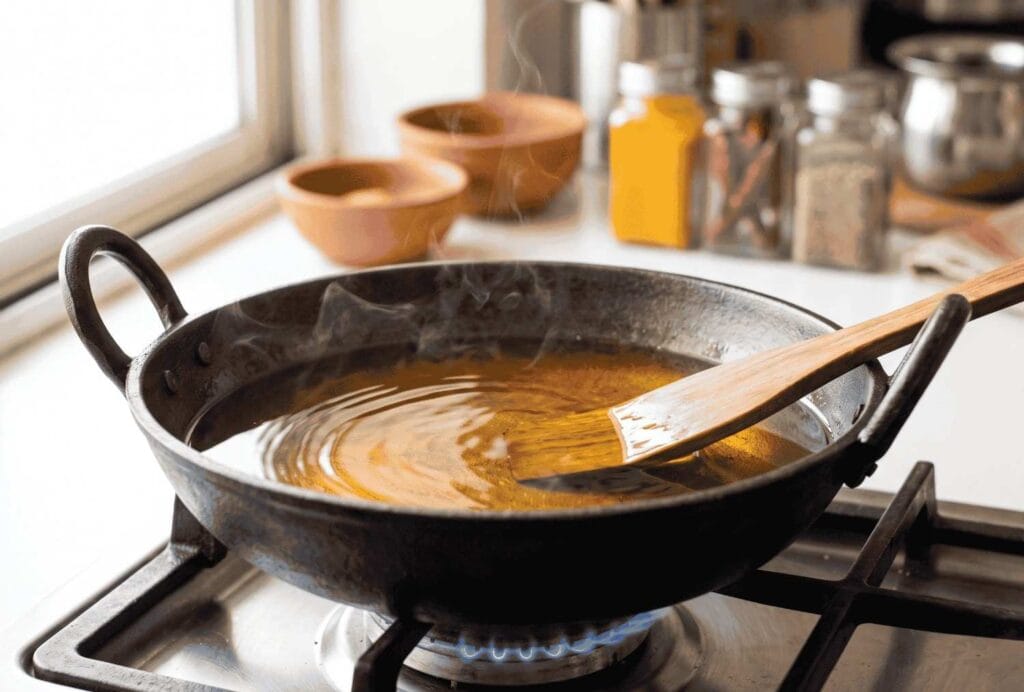
Mustard oil has a high smoke point, making it well suited to deep frying, tempering whole spices, and sautéing vegetables. In Bengali and Odia cooking, it is often heated until it just starts to smoke, mellowing the raw pungency, before spices like cumin, mustard seeds, or dried red chilies go into the hot oil. It also plays a starring role in achaar, or pickles, where its natural preservative qualities help vegetables and fruit stay fresh for months without refrigeration. Fish dishes such as shorshe ilish, or mustard fish curry, rely on mustard oil for their signature pungent base, and it is also drizzled raw over snacks and salads for a peppery finishing touch. If the raw smell feels overpowering, heating the oil first and letting it cool slightly before using it in a dressing or marinade can soften the sharpness considerably.
Mustard Oil for Skin and Hair: A Few Practical Tips
If you want to try mustard oil topically, a little goes a long way, since it is far more concentrated and pungent than lighter carrier oils like almond or coconut oil. Warm a small amount between your palms before massaging it into your scalp or skin, and always do a patch test on a small area, such as the inside of your wrist, at least 24 hours before wider use, since mustard oil can irritate sensitive skin. It is best avoided on broken skin, open wounds, around the eyes, or on infants and very young children, whose skin barrier is still developing. If you find it too strong on its own, mixing it with a milder oil can make it gentler for regular use.
Possible Side Effects and Precautions
Mustard oil is not without its caveats. Its erucic acid content has raised concerns in some research, which is part of why the United States FDA restricts its sale for cooking purposes, allowing it mainly for external use, in cosmetics, or as a flavoring agent in small amounts. In India, Bangladesh, Nepal, and several other countries, mustard oil has long been approved and widely used as an everyday cooking oil. If you are outside a region where it is approved for culinary use, check local labeling carefully, since bottles are often marked for external use only even where the same oil is sold as a cooking oil elsewhere. Mustard oil can also cause skin irritation or allergic contact dermatitis in some people, so a patch test is always wise. As with any oil, moderation matters, and anyone with a known mustard or seed allergy should avoid it altogether, both in food and in skincare.
How to Choose and Store Good Quality Mustard Oil
Look for cold-pressed or kachi ghani labels if you want the most traditional flavor and nutrient profile, and check the ingredient list to confirm it is pure mustard oil rather than a blend. Good mustard oil should have a deep amber to brownish-yellow color and a strong, pungent smell as soon as the bottle is opened; a very pale color or a flat smell can signal heavy refining or an older batch. Store it in a cool, dark place away from direct sunlight and heat, ideally in a tightly sealed glass bottle rather than plastic, since glass better blocks light and keeps out other odors. Stored properly, it should stay fresh for several months to a year after opening, though a duller smell over time is a good cue to replace it.
Frequently Asked Questions
Is mustard oil good for cooking?
Yes, in regions where it is approved as a food product, mustard oil is a flavorful, high smoke point oil well suited to frying, tempering, and pickling, and it brings a distinctive pungent taste central to many South Asian dishes.
Why is mustard oil banned in the US for cooking?
It is not fully banned, but the FDA restricts its sale for internal consumption because of its erucic acid content, so most bottles sold in the United States are labeled for external use or as a flavoring agent only, rather than as a general cooking oil.
Can you use mustard oil on your skin every day?
Many people do use small amounts regularly for massage or moisturizing, but it is a good idea to patch test first and stop use if you notice redness, itching, or irritation, since mustard oil can be irritating for sensitive skin types.
Is mustard oil good for hair growth?
Mustard oil is often used traditionally to moisturize the scalp and add shine, and its vitamin E and fatty acid content may support scalp health, but strong clinical evidence specifically proving it stimulates new hair growth is limited.
What is the difference between refined and cold-pressed mustard oil?
Cold-pressed mustard oil is extracted at low temperatures without heavy processing, preserving more pungency, color, and nutrients, while refined mustard oil undergoes additional heat treatment and filtering, resulting in a milder smell, lighter color, and longer shelf life.
Final Thoughts
Mustard oil earns its place in the kitchen and the bathroom cabinet alike, thanks to a mix of tradition and genuinely useful nutrients. Like most oils, the key is using it thoughtfully: choose good quality, cold-pressed versions when you can, and pay attention to regional guidelines if you are cooking with it outside South Asia. Used wisely, it is a flavorful and versatile oil worth having on your shelf.
Disclaimer
This article is for general informational purposes only and is not intended as medical advice. Mustard oil affects everyone differently, and research on some of its traditional uses is still limited. Please consult a qualified doctor, dietitian, or healthcare provider before making any changes to your diet, skincare routine, or health regimen, especially if you have existing conditions, allergies, or are pregnant or nursing.