
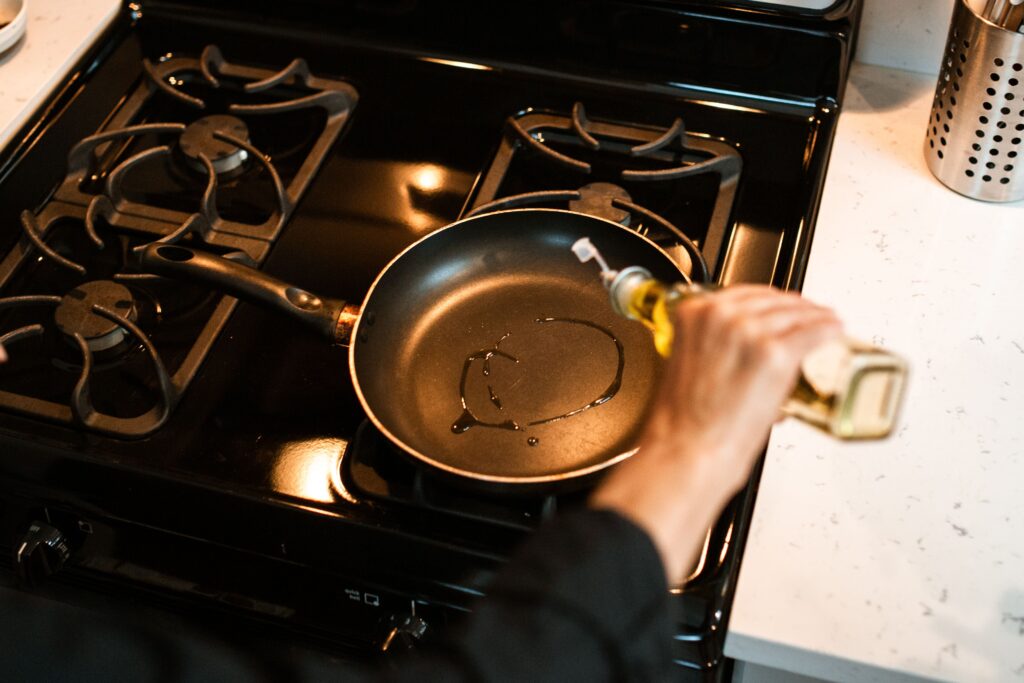
Ask five different people what the best oil for frying, cooking, and baking is, and you’ll probably get five different answers, along with a fair amount of confidence that theirs is the only right one. The truth is there isn’t a single best oil for everything, because frying, sautéing, and baking each put very different demands on an oil. Once you understand what those demands actually are, picking the right bottle becomes a lot less confusing.
Why the Right Oil Matters for Each Cooking Method
Three things determine whether an oil is a good fit for a job: smoke point, flavor, and how stable the fat is under heat. Deep frying needs an oil that can sit at high temperature for extended periods without breaking down. Baking usually needs something neutral that won’t fight with the flavor of the recipe. Everyday sautéing sits somewhere in the middle, where either flavor or heat tolerance might matter more depending on what’s in the pan. Mixing these up, like using a delicate, low smoke point oil for deep frying, is exactly how kitchens end up with a burnt, bitter batch of fries and a smoky kitchen.
Best Oils for Deep Frying
For deep frying, you want a high smoke point and a fat that doesn’t degrade quickly across multiple uses, since most people reuse frying oil at least once or twice. Refined peanut oil is a classic choice here, with a smoke point around 450°F (232°C) and a fairly stable structure that holds up over repeated frying sessions, something we cover in more depth in our guide to groundnut oil. Refined avocado oil and refined sunflower oil are also solid choices, both handling high heat well, though sunflower oil’s higher omega-6 content means it’s worth using in moderation rather than as your only fat source, something we go into in our article on oils to avoid. Avoid extra virgin olive oil and unrefined coconut oil for deep frying, both have lower smoke points and are frankly wasted at fryer temperatures where their flavor just burns off anyway.
Best Oils for Sautéing and Stir-Frying
This is where you have the most flexibility. Refined groundnut oil and avocado oil both work beautifully for high-heat stir-frying, while extra virgin olive oil is genuinely excellent for lower and medium heat sautéing, despite the persistent internet myth that it’s dangerous to cook with. Olive oil’s smoke point (roughly 375 to 405°F depending on quality) is plenty for most stovetop sautéing, it’s really only an issue if you’re trying to sear a steak at screaming high heat. Unrefined coconut oil also shines here for dishes where a background coconut flavor works, curries, stir-fried vegetables, or a pan of sautéed greens.
Best Oils for Baking
Baking is where neutrality usually wins. Refined coconut oil, refined avocado oil, and standard vegetable or canola oil all work well because they don’t compete with vanilla, chocolate, or fruit flavors in a cake or muffin batter. Unrefined coconut oil is the one exception worth calling out, since it solidifies below about 76°F (24°C), which actually makes it a workable substitute for butter in recipes that want a firmer fat, think pie crusts or certain cookie doughs, provided you’re fine with a hint of coconut flavor coming through. For a deeper look at how unrefined coconut oil behaves in the kitchen, our coconut oil guide walks through it in detail.
Neutral Oils vs Flavored Oils in Baked Goods
A quick rule of thumb: if the recipe already has a strong flavor profile (banana bread, spice cake, anything with cocoa), a mildly flavored oil like light olive oil or avocado oil won’t be noticeable. If the recipe is delicate, angel food cake, a plain pound cake, vanilla cupcakes, stick with something completely neutral like refined sunflower or canola oil so nothing competes with the subtle flavors you’re actually going for.
Smoke Point Cheat Sheet
- Refined avocado oil: ~520°F (271°C) – deep frying, searing
- Refined peanut (groundnut) oil: ~450°F (232°C) – deep frying, stir-frying
- Refined sunflower oil: ~450°F (232°C) – frying, high-heat sautéing
- Extra virgin olive oil: ~375–405°F (190–207°C) – sautéing, roasting, low-medium heat
- Unrefined coconut oil: ~350°F (177°C) – baking, low-medium heat sautéing
A Practical Kitchen Setup
You genuinely don’t need ten different oils in your cabinet. Most home cooks do fine with three: a refined high smoke point oil like avocado or groundnut oil for frying and searing, a good extra virgin olive oil for everyday sautéing and finishing dishes, and either unrefined coconut oil or a neutral oil for baking depending on what you bake most. I switched to this exact three-oil system a couple of years ago after getting overwhelmed by a cabinet full of half-used bottles, and I genuinely haven’t missed anything since. It also makes shopping simpler, since you’re not hunting for eight different specialty oils every time you run out of one.
Common Mistakes People Make
The biggest one is using the same bottle of extra virgin olive oil for everything, including deep frying, and then wondering why the kitchen fills with smoke and the food tastes slightly burnt. The second is assuming a higher price tag automatically means better performance for a given task, when really it’s about matching the oil’s properties to what you’re actually cooking. The third is reusing frying oil far past its useful life, if it’s dark, foamy, or smells off, it’s time to replace it rather than stretch it one more round.
Cold Uses: Dressings, Dips, and Drizzling
Not every oil decision happens at the stove. For raw, cold applications like salad dressings, dips, and finishing drizzles, flavor matters more than heat tolerance ever will. Extra virgin olive oil is the obvious standout here, and we go into exactly how to pick a good bottle for this purpose in our guide to olive oil for salad dressings. A good finishing oil can genuinely make a plain dish, a drizzle of peppery olive oil over roasted vegetables or a bowl of soup adds more flavor in ten seconds than another ten minutes of simmering ever would.
Matching Oil to Dietary Needs
If you’re cooking for someone with a peanut allergy, groundnut oil is one to double check, particularly unrefined versions that retain more allergenic protein. If you’re avoiding highly processed fats, leaning on extra virgin olive oil, avocado oil, and unrefined coconut oil over heavily refined seed oils is a reasonable approach, though as mentioned above, refined oils still have their place for high-heat jobs where a delicate oil would just burn. There’s no single “correct” oil for every kitchen, it really comes down to matching what you cook most often with an oil that handles it well.
Frequently Asked Questions
Can I use the same oil for frying and baking?
You can use a neutral refined oil like sunflower or canola for both, but specialty oils like extra virgin olive oil or unrefined coconut oil are better suited to specific uses rather than an all-purpose choice.
Is it true that olive oil is bad for cooking at high heat?
Not for typical stovetop sautéing and roasting. It’s only an issue at very high frying or searing temperatures that exceed its smoke point, where a higher smoke point oil is genuinely a better fit.
How many times can I reuse frying oil?
Most refined oils can be reused two to four times if strained and stored properly, but discard it sooner if it darkens significantly, smells rancid, or starts foaming during use.
Pingback: Iodine Value of Oils – What It Means and Why It Matters - EdibleOilExpert
Pingback: Vegetable Oil vs Sunflower Oil – Which One Is Healthier? - EdibleOilExpert