
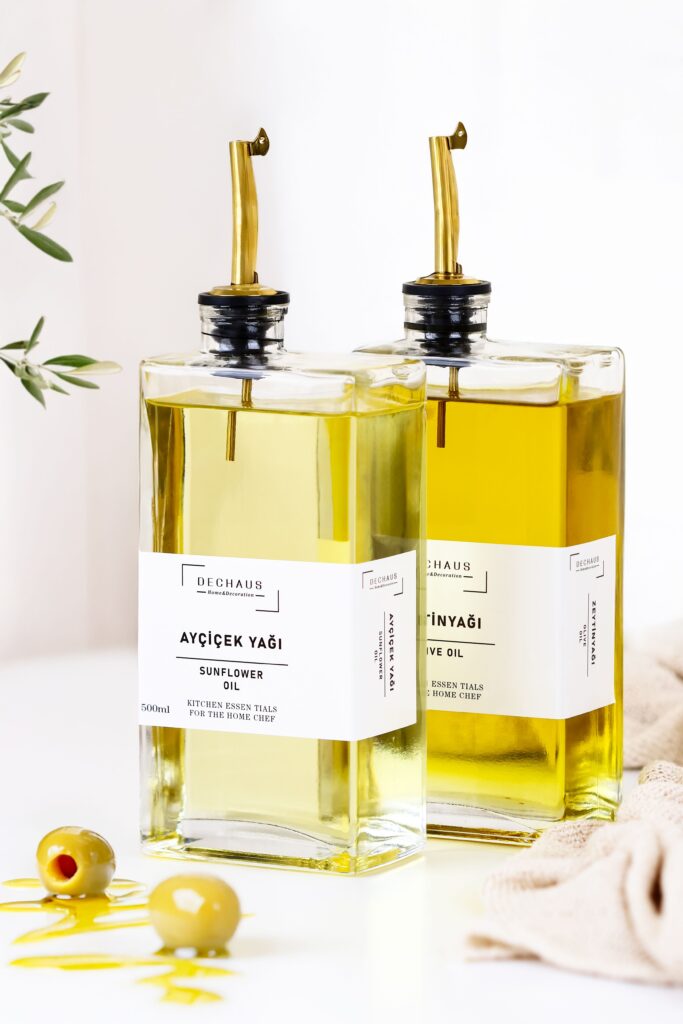
Walk down any supermarket aisle and you’ll find a wall of cooking oils promising to be “heart healthy” or “cholesterol free.” Not all of them deserve that reputation. Some of the most common oils sitting in kitchen cabinets today are loaded with high omega-6 fats, and a handful of products still carry lingering trans fats that quietly work against your health goals. If you’re trying to eat cleaner, or you just want to understand what’s actually going into your pan, it helps to know which oils to avoid and why.
Why Some Oils Deserve a Second Look
Not every oil is created equal, and price or popularity doesn’t tell you much about quality. Soybean oil, corn oil, and cottonseed oil are cheap to produce and show up in everything from packaged snacks to restaurant fryers, but that widespread use is exactly the problem. These oils are extremely high in omega-6 fatty acids, and when they become the dominant fat in someone’s diet, they can throw off a balance the body actually depends on.
The Omega-6 Problem: It’s Not the Fat, It’s the Ratio
Omega-6 fatty acids aren’t inherently bad. Your body needs a certain amount of linoleic acid, an omega-6 fat, for normal cell function. The trouble starts when omega-6 intake vastly outweighs omega-3 intake. Researchers who study this tend to point to a ratio somewhere between 1:1 and 4:1 (omega-6 to omega-3) as reasonable, but the typical Western diet often lands closer to 15:1 or even 20:1. That skew has been linked in various studies to low-grade inflammation, which over time is associated with a higher risk of heart disease and other chronic conditions.
Think about a typical day of eating for a lot of people: cereal with vegetable oil additives for breakfast, a sandwich with soybean oil mayo for lunch, and something fried in cottonseed oil for dinner. None of these choices feel excessive on their own, but added together, the omega-6 load stacks up fast without anyone noticing.
Oils Highest in Omega-6
- Soybean oil
- Corn oil
- Cottonseed oil
- Sunflower oil (standard, not high-oleic)
- Grapeseed oil
These oils aren’t poison, and having them occasionally isn’t going to derail anyone’s health. The real concern is volume, since they’re the default oil in most processed and fried foods, which means most people are consuming far more of them than they realize.
Trans Fats: The Real Villain Hiding in Plain Sight
If high omega-6 content is a slow-moving concern, trans fats are the more direct one. Artificial trans fats are created through partial hydrogenation, a process that turns liquid oil into a semi-solid fat with a longer shelf life. Food companies leaned on this for decades because it made products shelf-stable and gave baked goods a particular texture. The problem is that trans fats raise LDL cholesterol while lowering HDL cholesterol, a combination that’s about as bad as it gets for cardiovascular health.
The FDA banned artificial trans fats in the U.S. food supply back in 2018, and many other countries have followed similar paths, so this is much less of an issue than it was in the 1990s. But “banned” doesn’t mean “gone.” Products can still legally list 0 grams of trans fat on the label if a single serving contains less than 0.5 grams, which means eating multiple servings across a day can add up to a meaningful amount without ever showing up on a nutrition label as anything other than zero.
Where Trans Fats Still Hide
Keep an eye out for the phrase “partially hydrogenated oil” in an ingredients list, since that’s the telltale sign of trans fat, regardless of what the nutrition facts panel claims. Foods where I’ve still spotted it in recent years include certain non-dairy coffee creamers, microwave popcorn, some frozen pizza crusts, and a handful of imported baked goods that don’t fall under the same labeling rules. A coworker of mine once assumed her favorite pie crust was fine because the label said “0g trans fat,” until she flipped it over and saw “partially hydrogenated vegetable oil” third on the ingredient list.
How to Spot These Oils on Ingredient Labels
Reading labels gets a lot easier once you know what to look for. Scan the ingredients list, not just the nutrition facts panel, since that’s where the actual oil names show up before they get bundled into fat totals. If you see soybean oil, corn oil, cottonseed oil, or “partially hydrogenated” anything near the top of the list, that product is leaning heavily on the oils worth limiting. Restaurant fryers are trickier since there’s no label at all, but a quick question to staff about what oil they fry in can tell you a lot, and many chains now list this information on their websites.
Better Alternatives to Reach For
Swapping out high omega-6 oils doesn’t mean giving up cooking oil altogether, it just means choosing differently. Extra virgin olive oil is a solid everyday choice for low and medium heat cooking, and if you want something for higher heat, avocado oil holds up well without the same omega-6 load. If you’ve read our guide on unrefined coconut oil, that’s another good option for baking and sauteing where a bit of natural flavor is welcome. Ghee and grass-fed butter, used in moderation, are also reasonable swaps if you’re comfortable with animal fats.
None of this requires an all-or-nothing approach. The goal isn’t to panic over every bottle of vegetable oil in the pantry, it’s to shift the balance so these oils aren’t the default fat in every single meal you eat.
Practical Pantry Swaps
- Cooking oil: Swap soybean or corn oil for extra virgin olive oil or avocado oil.
- Mayonnaise: Look for versions made with avocado oil or olive oil instead of soybean oil.
- Salad dressing: Check the ingredient list, many bottled dressings default to soybean or canola oil blends.
- Baked goods: Homemade baking lets you control the fat; store-bought items are where partially hydrogenated oils are most likely to hide.
- Popcorn: Air-popped with a drizzle of unrefined coconut oil rather than microwave bags made with palm or partially hydrogenated oil.
A Realistic Way to Cut Back
I started by just changing what I kept out on the counter. Once the soybean oil bottle was pushed to the back of the cabinet and olive oil was the one sitting out in plain view, my day-to-day cooking shifted naturally without much extra thought. Restaurant meals and packaged snacks are harder to control, so I stopped trying to be perfect about those and focused instead on the oil I actually cook with at home, which is the easiest lever to pull. Small changes like this add up over months in a way that a strict short-term overhaul usually doesn’t.
Frequently Asked Questions
Are all vegetable oils bad for you?
Not necessarily. The concern is mainly with oils that are extremely high in omega-6 and consumed in large volumes through processed and fried foods. Used occasionally in a balanced diet, most oils aren’t going to cause harm on their own.
How can I tell if a product has trans fat if the label says zero?
Check the ingredients list for “partially hydrogenated oil.” Labeling rules allow companies to round down to 0 grams if a serving has less than 0.5 grams, so the ingredient list is more reliable than the nutrition facts panel for this.
What’s the healthiest oil to cook with every day?
Extra virgin olive oil is one of the most well-studied options for daily cooking, especially at low to medium heat. Avocado oil is a good choice when you need a higher smoke point for searing or roasting.
Pingback: Groundnut (Peanut) Oil: Benefits and Uses -
Pingback: Vegetable Oil vs Sunflower Oil – Which One Is Healthier? -
Pingback: Top Seed Oil Alternatives You Should Try -
Pingback: Iodine Value of Oils – What It Means and Why It Matters - EdibleOilExpert
Pingback: Best Oil for Frying, Cooking, and Baking – Complete Guide - EdibleOilExpert
Pingback: Best Olive Oil for Salad Dressings - EdibleOilExpert